Juneteenth is coming. You want to celebrate with your kids, but you’re not sure how to make it meaningful without making it heavy. You want them to understand the history, but you also want them to feel the joy. You want age-appropriate activities that honor the depth of the day without overwhelming young minds.
Here’s the comprehensive guide to Juneteenth activities for families, rooted in the principle that Black history education should center joy as much as struggle, celebration as much as suffering.
Why Juneteenth Matters for Kids (And How to Explain It)
Juneteenth celebrates June 19, 1865, the day enslaved people in Galveston, Texas, learned they were free. The Emancipation Proclamation had been signed two and a half years earlier, but freedom came late to Texas. Juneteenth marks the moment when the last enslaved people heard the news: you are free.
Age-Appropriate Explanations
For young kids (ages 4-7): “Juneteenth is a celebration! A long time ago, some people weren’t allowed to be free. But on Juneteenth, they learned they could be free. Now we celebrate freedom, family, and being together.”
For older kids (ages 8-12): “Juneteenth celebrates the day enslaved people in Texas found out they were free. Even though President Lincoln had signed a paper saying enslaved people were free, it took a long time for everyone to hear the news. When they finally heard, they celebrated. We still celebrate that day because freedom is worth celebrating.”
For teens: Full historical context, including why emancipation was delayed in Texas, the role of Union soldiers in enforcing freedom, and the ongoing significance of Juneteenth as both historical commemoration and contemporary celebration of Black resilience and joy.
RELATED: Why Black Family Coloring Pages Keep Our Stories Alive
The Problem With Most Juneteenth Materials for Kids
Walk into any bookstore in May or June and you’ll find Juneteenth books for kids. Many are well-intentioned. But most make the same mistake: they center trauma over joy.
Page after page of slavery. Chains. Suffering. Then one page about freedom at the end. The message kids receive: Juneteenth is about what was taken from us, not what we claimed for ourselves.
What Joy-Centered Juneteenth Education Looks Like
Joy-centered doesn’t mean ignoring history. It means starting with celebration and working backward to context, rather than dwelling in trauma and offering celebration as an afterthought.
Show kids images of Juneteenth celebrations first: families gathering, food being shared, music playing, people dressed in their best, communities coming together. Then explain: this is what people did when they learned they were free. This is what we still do to remember.
The history provides context. The celebration provides meaning.
How Coloring Pages Make Freedom Tangible for Kids
Abstract concepts (freedom, emancipation, resilience) are hard for kids to grasp. Concrete activities make them tangible. Coloring is one of the most effective tools for this.
Why Coloring Works for Teaching Juneteenth
Hands-on engagement: Kids process information better when their hands are busy. Coloring keeps them engaged while you talk about history.
Visual memory: A child who colors a Juneteenth celebration scene will remember that image. Visual memory is stronger than auditory memory for most kids.
Conversation catalyst: Coloring creates natural pauses for questions. “Why are they celebrating?” “What does freedom mean?” The coloring page becomes a conversation prompt.
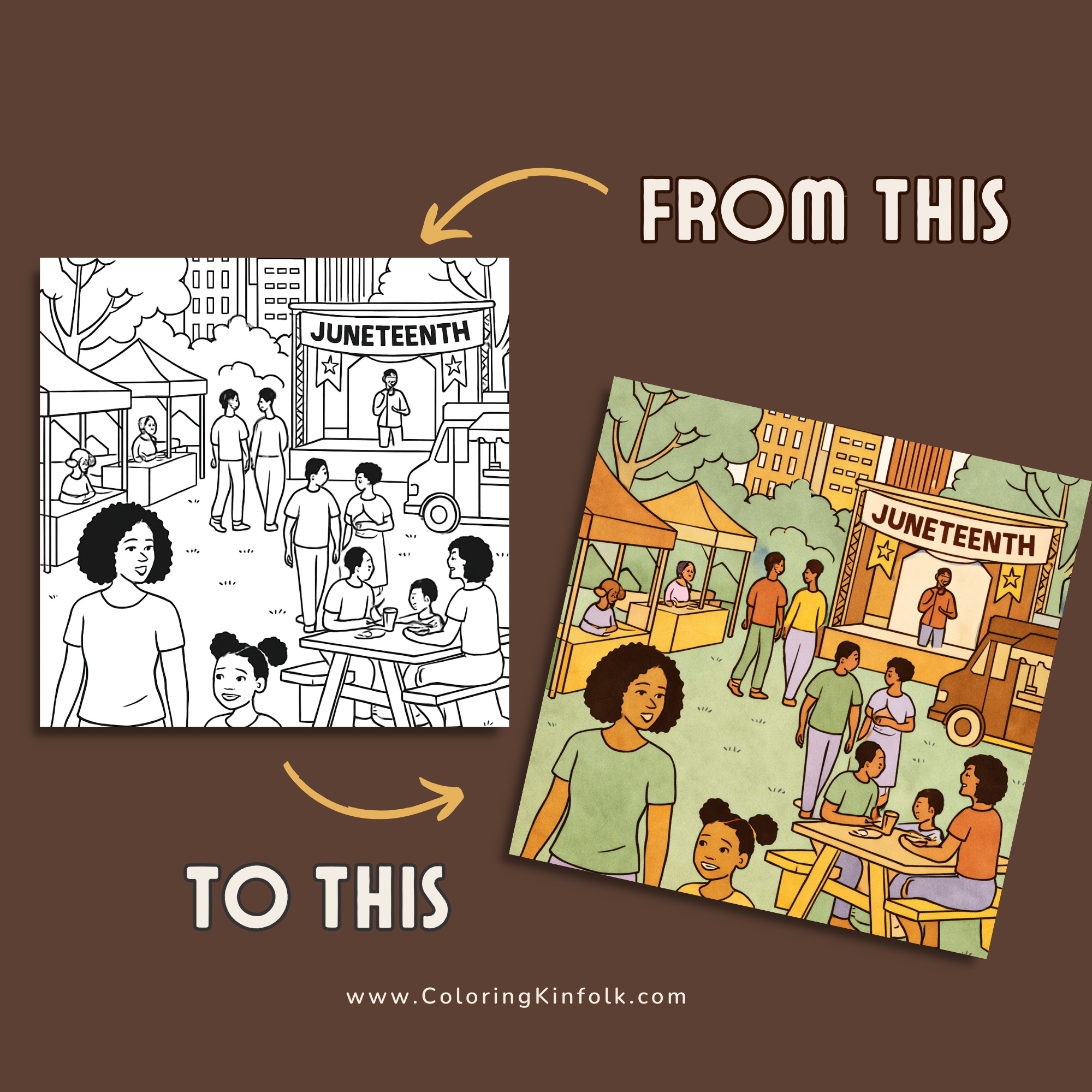
Cultural affirmation: When kids color scenes that look like their family, their community, their world, they’re not just learning history. They’re seeing themselves as part of that history.
What to Look for in Juneteenth Coloring Pages for Kids
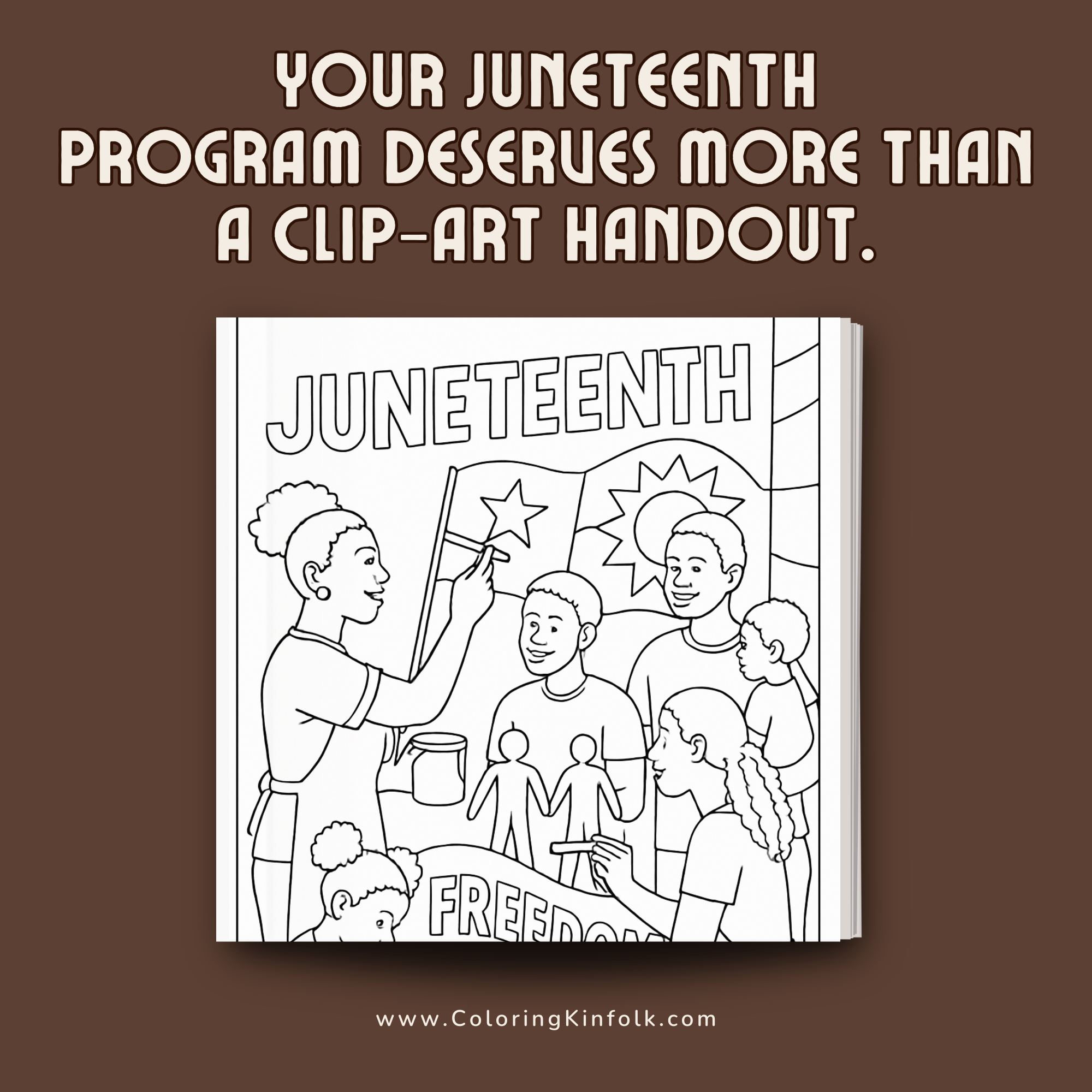
Not all Juneteenth coloring pages are created equal. Here’s what makes a good one:
Joy-Centered Imagery
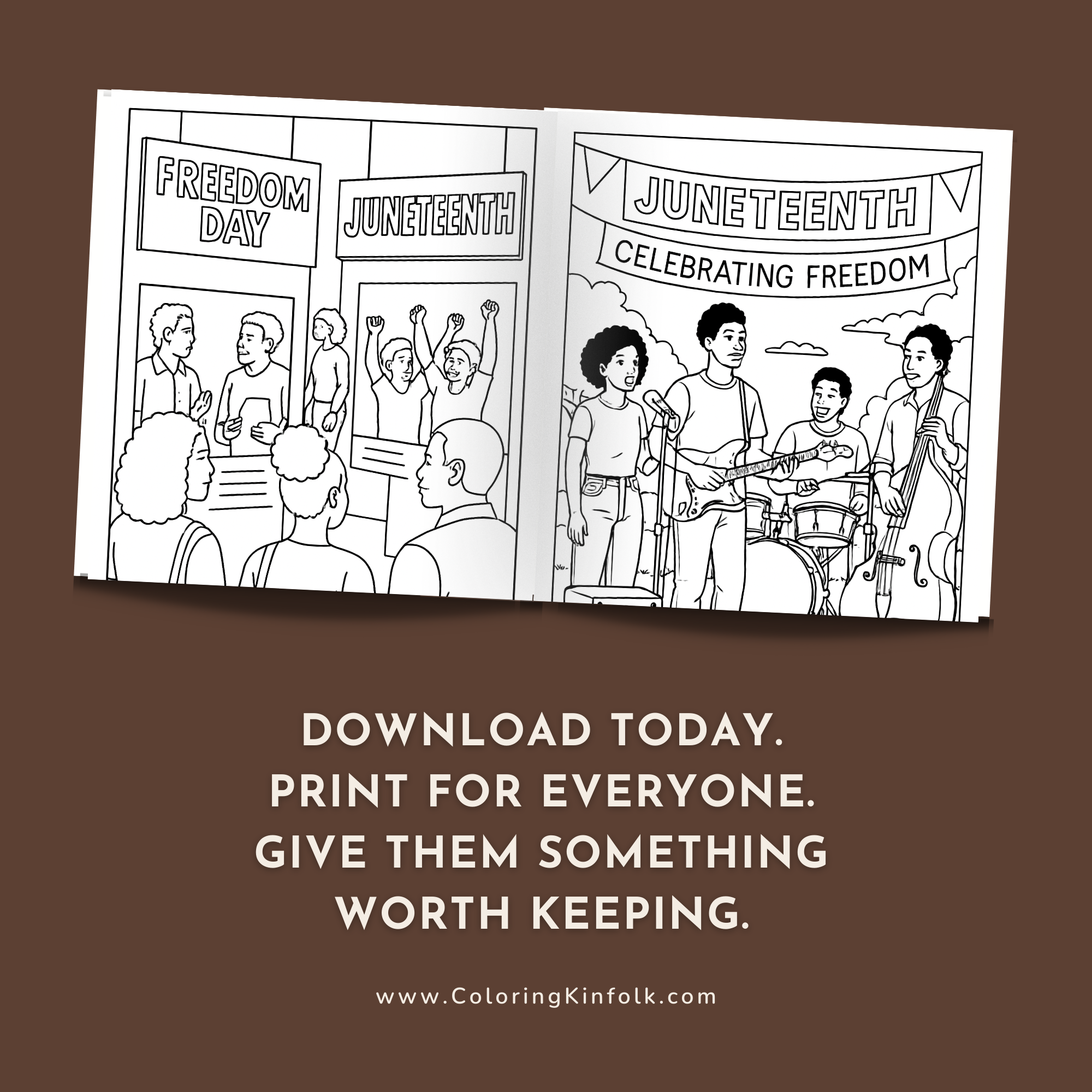
Families gathering. Community celebrations. Food being shared. Music. Dancing. People in their best clothes. These scenes show what freedom looks like in practice: the ability to gather, celebrate, and be together without fear.
Culturally Authentic Details
Generic “diverse” families won’t do. Look for specific cultural markers: the way people dress, the food on the table, the way communities gather. Authenticity matters. Kids can tell the difference between generic representation and genuine cultural specificity.
Age-Appropriate Complexity
Younger kids (4-7) need simpler line art with larger shapes. Older kids (8-12) can handle more detail. Teens might appreciate more sophisticated artistic styles. Match the complexity to the age group.
Conversation Prompts
The best Juneteenth coloring pages include questions or prompts: “What does freedom mean to you?” “What are you grateful for today?” These turn coloring from a solo activity into a family dialogue.
RELATED: Why Creative Rituals Matter for Black Families
A Complete Juneteenth Activity Plan for Families
Here’s a full-day Juneteenth celebration plan that balances education, activity, and joy:
Morning: Story and Context (30 minutes)
Start with a Juneteenth book appropriate for your kids’ ages. Read together. Answer questions. Keep it conversational, not lecture-style.
Then show them a map: Here’s Galveston, Texas. This is where people first heard the news. This is what they did when they found out. This is why we still celebrate.
Late Morning: Coloring and Conversation (45 minutes)
Set up a coloring station with Juneteenth-themed pages. Sit with your kids while they color. Use conversation prompts from the coloring book. Let them ask questions. Share family stories if you have them.
The coloring keeps their hands busy. The conversation keeps their minds engaged. This is active learning, not passive consumption.
Midday: Food and Family (1-2 hours)
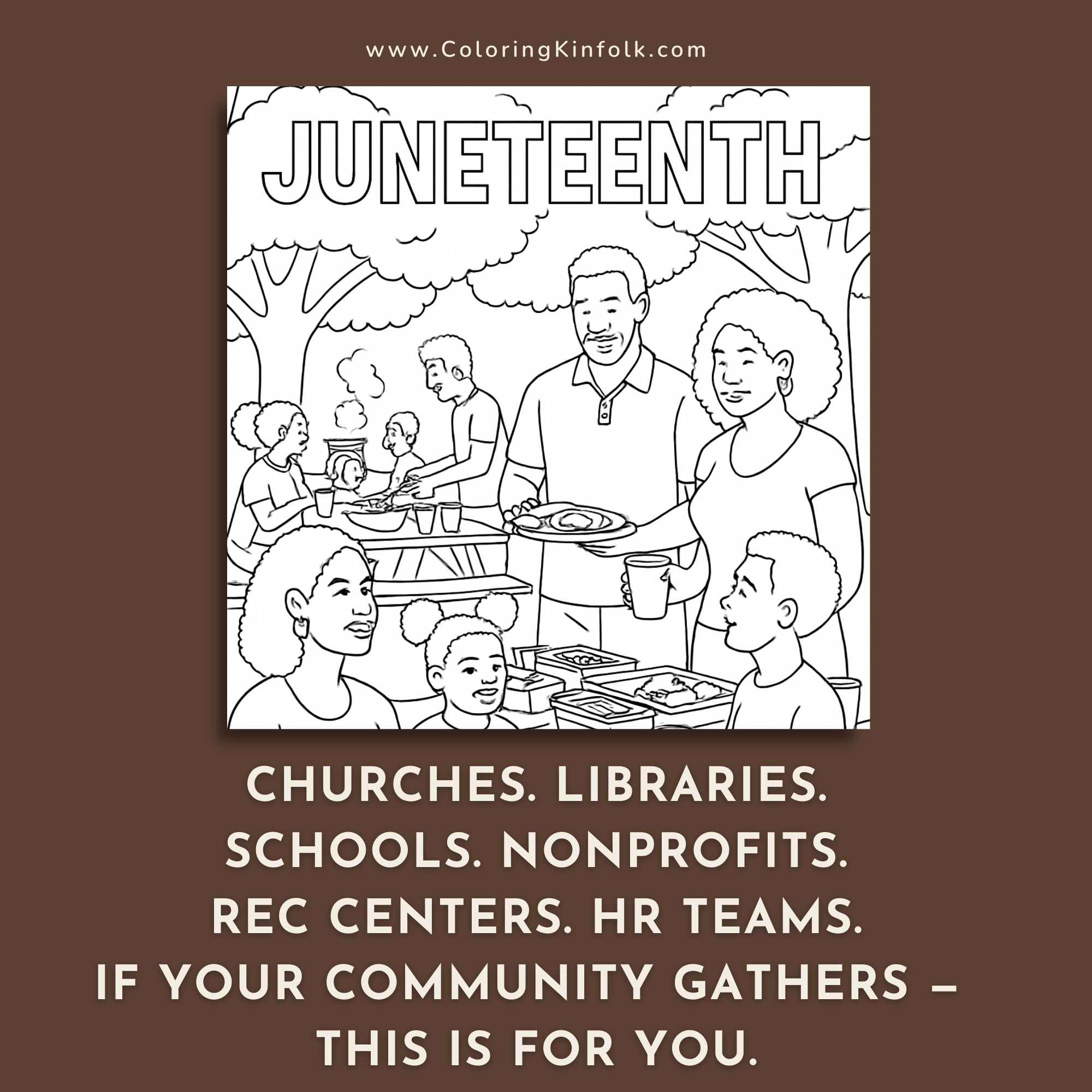
Traditional Juneteenth foods: red drinks (strawberry lemonade, hibiscus tea), barbecue, potato salad, watermelon, red velvet cake. Let kids help with food prep. Explain the significance of red foods (symbolizing resilience and sacrifice).
Eat together. Tell stories. Let elders share memories. This is intergenerational connection through food and narrative.
Afternoon: Creative Projects (1 hour)
Beyond coloring: make Juneteenth flags (red, white, blue with the star and arc). Create freedom collages with magazine cutouts. Write freedom poems. Let kids express what freedom means to them through art.
Evening: Community or Reflection (flexible)
If there’s a local Juneteenth celebration, attend as a family. If not, create your own reflection moment: everyone shares one thing they’re grateful to be free to do.
Juneteenth Activities by Age Group
Ages 3-5: Simple and Sensory
Coloring: Large, simple Juneteenth scenes with bold lines. Focus on celebration imagery.
Music and movement: Play freedom songs. Dance together. Kids this age learn through their bodies.
Story time: Picture books with minimal text. Focus on joy and family, not detailed history.
Food activity: Let them help make red lemonade. Explain: red is a special color for Juneteenth.
Ages 6-8: Interactive Learning
Coloring with prompts: More detailed pages. Add conversation starters: “What does freedom look like?” “What would you celebrate?”
Timeline activity: Create a simple timeline: 1865 (Emancipation Proclamation), June 19, 1865 (Juneteenth), Today (we celebrate).
Role play: Act out the moment when people heard they were free. How would you feel? What would you do first?
Craft project: Make Juneteenth flags. Explain each color: red (blood shed), white (new beginnings), blue (perseverance).
Ages 9-12: Deeper Engagement
Advanced coloring: Detailed historical scenes. Include quotes from the Emancipation Proclamation or General Granger’s Order.
Research project: Look up your family’s history. Where were your ancestors in 1865? When did they learn about emancipation?
Writing activity: Write a letter to ancestors. What would you tell them about freedom today?
Community service: Volunteer at a Juneteenth event. Service connects learning to action.
Ages 13+: Critical Thinking
Historical analysis: Why was emancipation delayed in Texas? What systems allowed that? What parallels exist today?
Creative expression: Use Juneteenth coloring as meditation or reflection. Pair with journaling about freedom and identity.
Documentary: Watch Juneteenth documentaries together. Discuss afterward.
Community engagement: Help organize a Juneteenth event. Planning builds ownership and pride.
RELATED: 5 Ways Coloring Books Bring Black Families Together
Common Questions Parents Ask About Teaching Juneteenth
“How much detail about slavery should I include?”
Enough to provide context, not so much that it becomes the focus. The goal is understanding why freedom mattered, not dwelling on trauma. Adjust detail to age: less for younger kids, more for older.
“What if my kids ask hard questions I don’t know how to answer?”
It’s okay to say “I don’t know, let’s find out together.” Model curiosity and learning. Use the question as an opportunity to research as a family.
“Should non-Black families celebrate Juneteenth?”
Juneteenth is American history. All Americans can learn about it and recognize its significance. The key is approaching it with respect, centering Black voices and experiences, and using it as an opportunity to learn rather than perform allyship.
“How do I make it feel celebratory when the history is painful?”
Remember: Juneteenth was celebrated by formerly enslaved people with joy, music, food, and community. That joy was their choice. Honor their choice by centering celebration. The pain provides context; the joy provides meaning.
Why Culturally Authentic Materials Matter
Generic “diverse” Juneteenth materials—clipart with brown skin tones slapped onto generic celebration scenes—don’t work. Kids can tell the difference between authentic cultural representation and surface-level diversity.
Culturally authentic Juneteenth coloring pages show specific details: the way Black families gather, the food on the table, the church hats, the barbecue pit, the way elders and children interact. These details matter. They tell kids: your culture is specific, valued, and worth preserving.
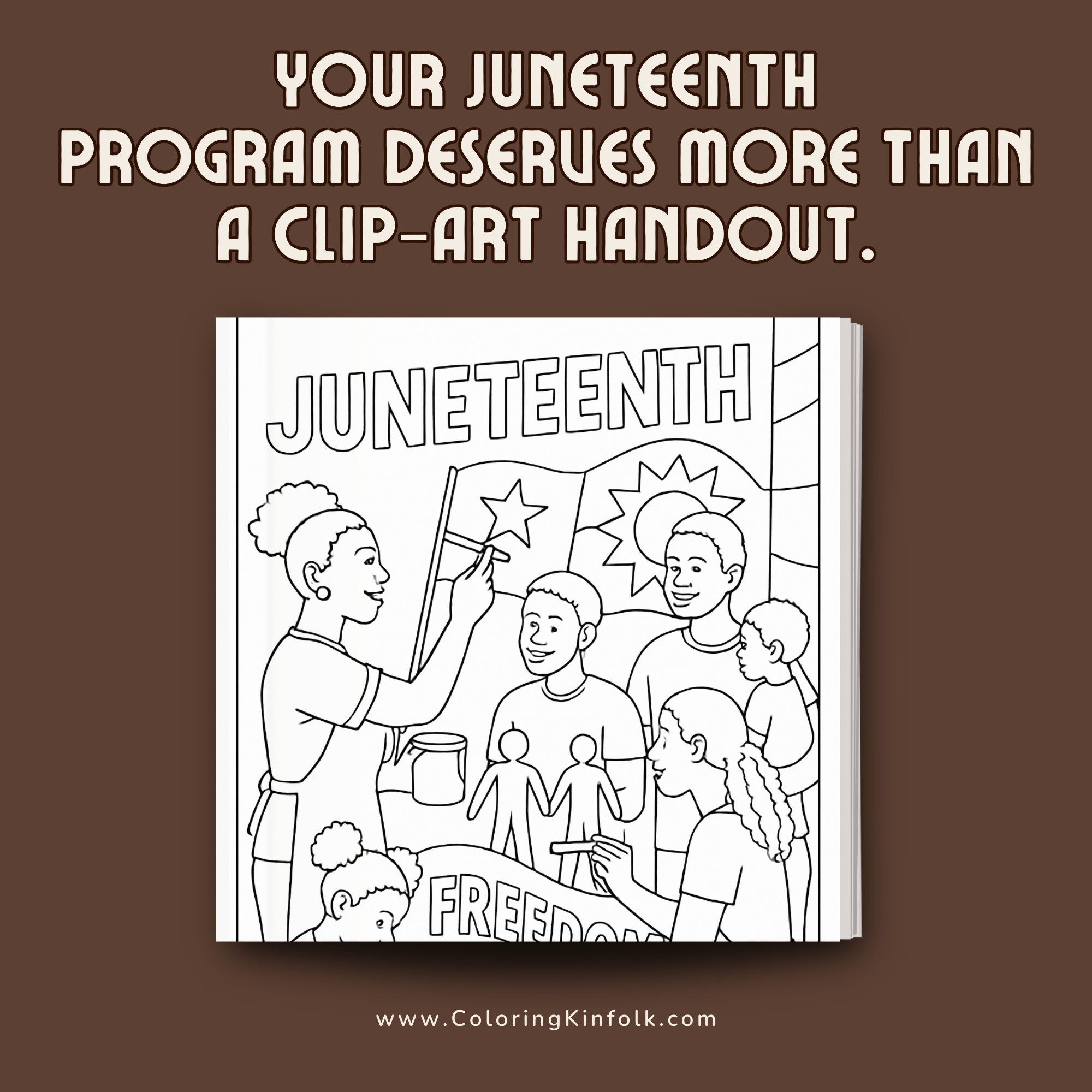
Coloring Kinfolk’s Juneteenth collection is built on this principle: cultural specificity is not a limitation. It’s the entire value proposition. Every page depicts recognizable scenes from Black American celebration: family reunions, community gatherings, church services, block parties. This is what freedom looks like in practice.
Making Juneteenth an Annual Family Tradition
Don’t let Juneteenth be a one-time lesson. Make it an annual tradition. Here’s how:
Create a Juneteenth box: Store coloring pages, books, decorations, and activity materials. Pull it out every June. Add to it each year.
Annual family photo: Take a picture every Juneteenth. Watch your kids grow alongside their understanding of the holiday.
Rotating leadership: Each year, a different family member plans one activity. Kids take ownership as they get older.
Community connection: Attend local celebrations. Find your people. Juneteenth is about community, not just family.
Story collection: Record elders sharing memories. Build a family oral history around Juneteenth conversations.
Where to Find Quality Juneteenth Materials
Coloring Kinfolk’s Juneteenth collection includes 25+ pages of joy-centered, culturally authentic celebration scenes. Each page includes conversation prompts designed for family dialogue. Available as instant digital download (perfect for last-minute planning) or print edition.
The collection features: community celebrations, family gatherings, church services, block parties, food preparation scenes, children playing, elders sharing stories, and freedom moments. Every image centers Black joy and cultural pride.
Final Thoughts: Freedom Is Worth Celebrating
Juneteenth is not just history. It’s a living tradition of Black joy, resilience, and community. When you celebrate with your kids, you’re not just teaching them about 1865. You’re showing them that freedom is ongoing, celebration is resistance, and Black joy is revolutionary.
Coloring pages, food, music, stories, and gathering—these aren’t frivolous activities. They’re how we pass down culture. They’re how we make abstract concepts tangible. They’re how we teach our kids: your heritage is worth celebrating. Your freedom is worth honoring. Your joy is your birthright.
Celebrate Juneteenth With Joy and Purpose
Make Juneteenth meaningful for your family with culturally authentic coloring pages that center Black joy, not just trauma. Every page designed for conversation, connection, and celebration of freedom.
Coloring Kinfolk’s Juneteenth collection includes 25+ celebration scenes, conversation prompts for all ages, and educational context that honors both history and joy. Instant digital download available.
Leave a Reply