You run programs for a church, nonprofit, or community organization. You’re looking for activities that bring people together across age groups, don’t require massive budgets, and actually create meaningful connection—not just occupy time.
Here’s how organizations like yours are using culturally specific Black culture coloring books to build intergenerational connection, support memory care programming, and create community in ways that surprise even experienced program directors.
The Institutional Challenge Nobody Talks About
You need programming that works for mixed ages, limited budgets, and diverse ability levels. Most “intergenerational activities” are actually kid activities that adults tolerate. Finding genuine all-ages engagement is harder than it sounds.
Then there’s the licensing problem: you find great materials online, purchase one copy, print 50 for your program—and you’ve just committed copyright infringement. Most organizations don’t realize consumer downloads aren’t licensed for institutional use.
RELATED: Why Black Family Coloring Pages Keep Our Stories Alive
Case Study #1: AME Church Senior Ministry (Atlanta)
The Challenge
Monthly senior fellowship serving 40-60 members ages 65-92. Previous activities: bingo, music, speakers. Attendance declining. Members said it felt “boring.”
The Solution
Added monthly coloring fellowship using Black culture coloring books. Set up tables with culturally specific images—Sunday Dinners, church scenes, family gatherings. Provided conversation prompts.
The Results
Attendance increased 35% within three months. Members arrived early for “good seats.” Unexpected outcome: members took pages home for grandchildren, creating intergenerational connection beyond the program.
“The coloring pages showing Sunday Dinners triggered so many stories. People who’d been quiet for months started talking. One member said ‘This is the first time I’ve felt like myself in a long time.’” — Ministry Coordinator
Case Study #2: Community Center Family Night (Chicago)
The Challenge
Weekly family night struggling with age range. Activities worked for kids OR adults, not both. Sporadic attendance.
The Solution
Permanent coloring station as drop-in activity. Black family imagery. Ongoing availability, not scheduled blocks.
The Results
87% family retention rate. Post-survey: coloring station was “key reason” for continued attendance. Grandparents started attending specifically for coloring with grandchildren.
Case Study #3: Nonprofit Memory Care Program (North Carolina)
The Challenge
Serving 30 families with loved ones experiencing dementia. Needed activity facilitating family connection. Generic coloring books showed minimal engagement.
The Solution
Switched to culturally specific Black American life imagery. Sunday Dinners, front porches, church gatherings. Added memory prompts.
The Results
Measurable increase in verbal engagement. Families reported having “real conversations” for first time in months. Cultural specificity triggered autobiographical memory.
“Generic flowers got polite participation. The Sunday Dinner scene got stories, laughter, tears. The cultural specificity made all the difference.” — Program Director
RELATED: How Coloring Books Support Memory Care
Implementation Guide for Organizations
Step 1: Secure Institutional Licensing
Purchase bulk institutional license ($197). Grants unlimited print rights for your organization. One purchase covers all programming needs.
Step 2: Set Up Your Coloring Station
Materials: Print 30-50 pages initially. Crayons, markers, colored pencils in bins. Table coverings. Name labels. Take-home folders. Conversation prompt cards.
Location: Visible, accessible. Near refreshments. Good lighting essential.
Step 3: Train Your Facilitators
This isn’t art class—no “coloring inside lines” pressure. Goal is conversation, not completion. Cultural images are memory triggers. Allow silence.
Step 4: Start Simple, Build From There
Month 1: Just offer coloring. Month 2: Add conversation prompts. Month 3: Consider recording stories. Let it evolve.
Budget Math for Institutional Programs
Wrong approach: Buy $15 consumer book, photocopy 40 times. Cost: $15 + copyright violation.
Right approach: Institutional license $197, unlimited printing, legal group use, reusable year after year.
Cost per participant (monthly program, 40 people, 12 sessions):
Year 1: $197 license + $60 supplies + $120 printing = $377 total
$377 ÷ 480 participant-sessions = $0.79 per person per session
Year 2+: Printing only $120/year = $0.25 per person per session
RELATED: Why Creative Rituals Matter for Black Families
Common Implementation Mistakes
Mistake #1: Using Generic Materials
Generic “diverse” coloring books with brown skin tones get minimal engagement. Cultural specificity triggers memory and recognition.
Mistake #2: Over-Facilitating
Hovering facilitator fills every silence. Participants feel managed. Better: set up materials, gentle prompts, step back.
Mistake #3: Separating Ages
Kids’ table, adults’ table eliminates intergenerational benefit. Mixed seating is the point.
Mistake #4: Making It Optional Afterthought
Materials on side table, nobody explains. Low participation. Make it central, visible, facilitated initially.
What Program Directors Are Saying
“We tried generic coloring books first. Minimal engagement. Switched to culturally specific Black family imagery and it was like a switch flipped. Same activity, different materials, completely different outcome.” — Church Director, Tennessee
“The institutional licensing solved a problem I didn’t know we had. We’d been photocopying consumer books for years. One license and we’re legal, unlimited printing. Should have done this years ago.” — Nonprofit Director, Maryland
Beyond Coloring: Building Sustainable Programs
Start with coloring station. Once working, add: story recording project, memory wall display, intergenerational pairs, take-home packets.
The coloring is the foundation. Community building is the goal.
Final Thoughts: Why Cultural Specificity Matters
You cannot build genuine intergenerational connection with generic materials. Cultural specificity triggers memory in elders, teaches heritage to youth, creates recognition that makes dialogue meaningful.
A Sunday Dinner scene isn’t just a picture. It’s a memory trigger. It’s a conversation starter. It’s cultural transmission happening while hands are busy.
Nonprofits, churches, and community organizations serving Black communities need materials that reflect those communities. Not generic diversity. Specific, recognizable, culturally rooted imagery that says: your life matters, your stories matter, your heritage is worth preserving.
That’s what makes institutional programming meaningful instead of just filling time.
Institutional Solution: Purpose-Built for Nonprofits, Churches & Organizations
Stop settling for generic materials or copyright violations. Get institutional bulk licensing designed specifically for organizational programming.
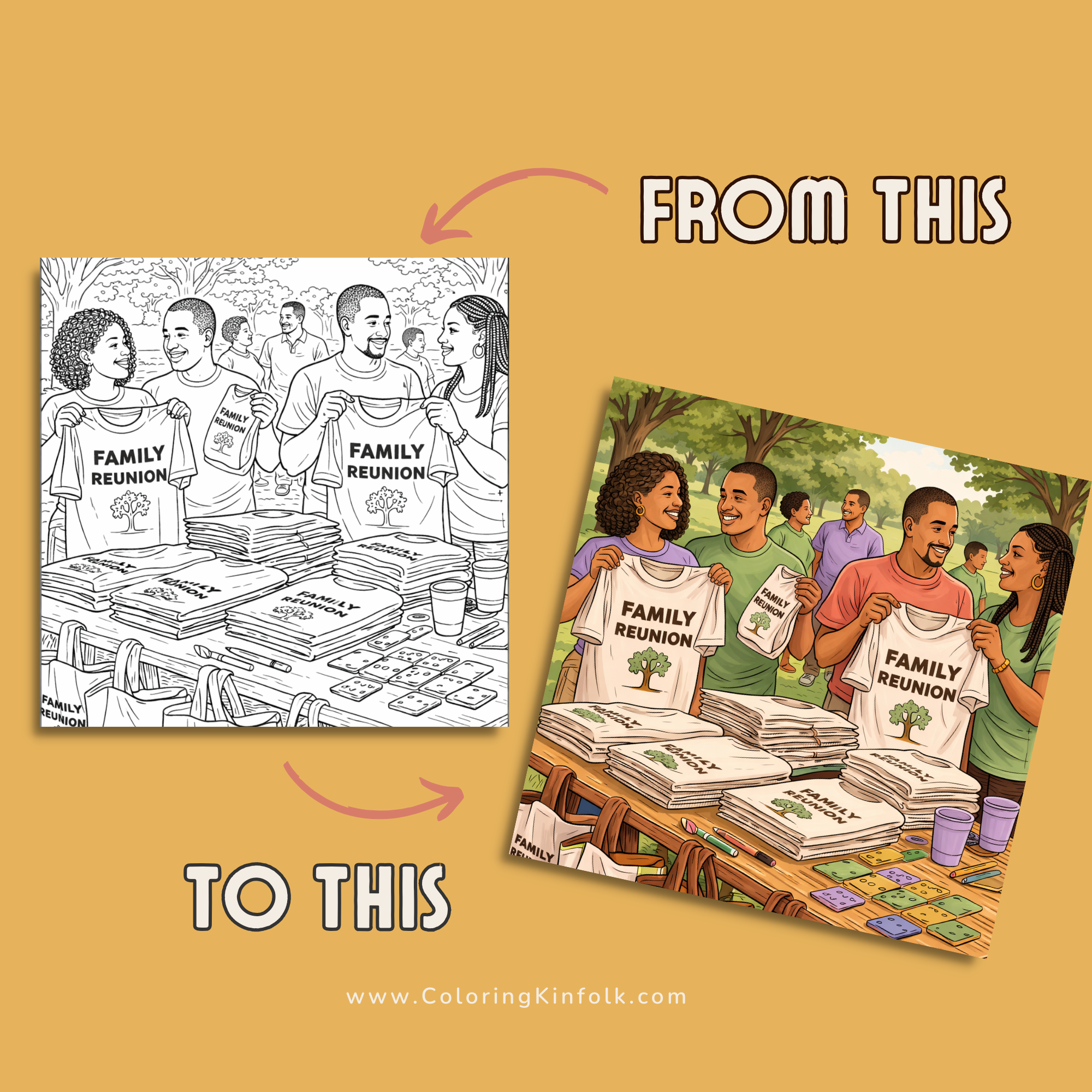
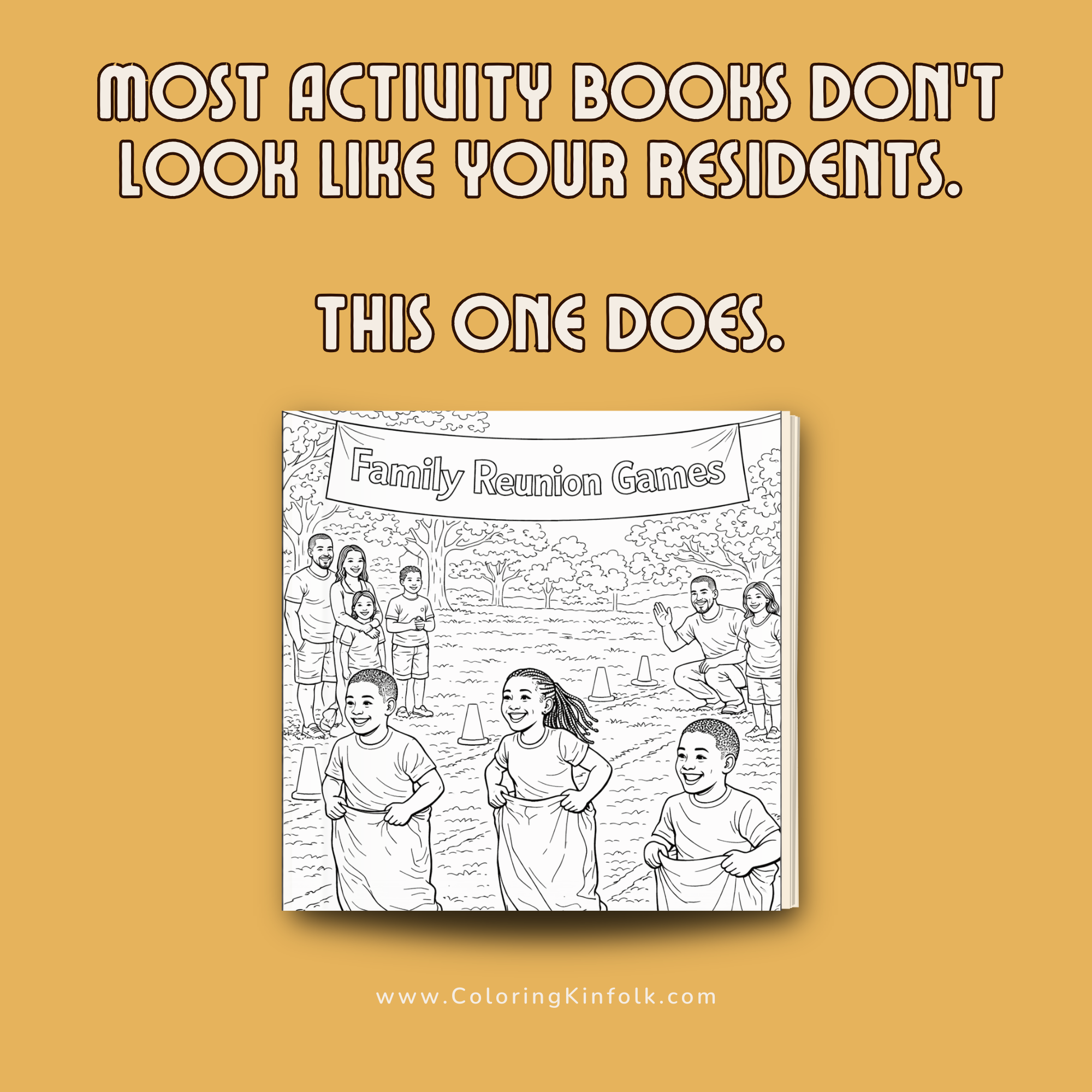
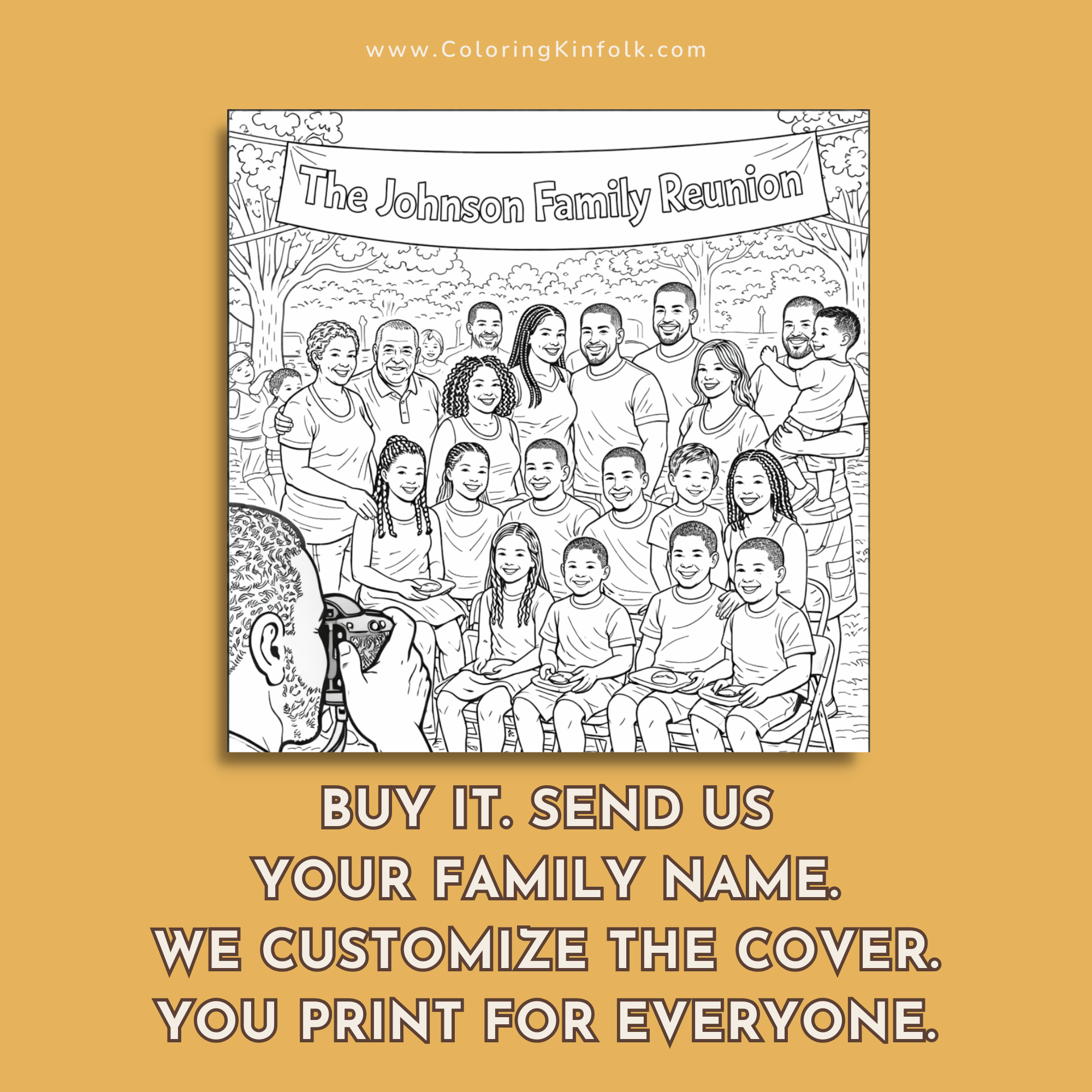
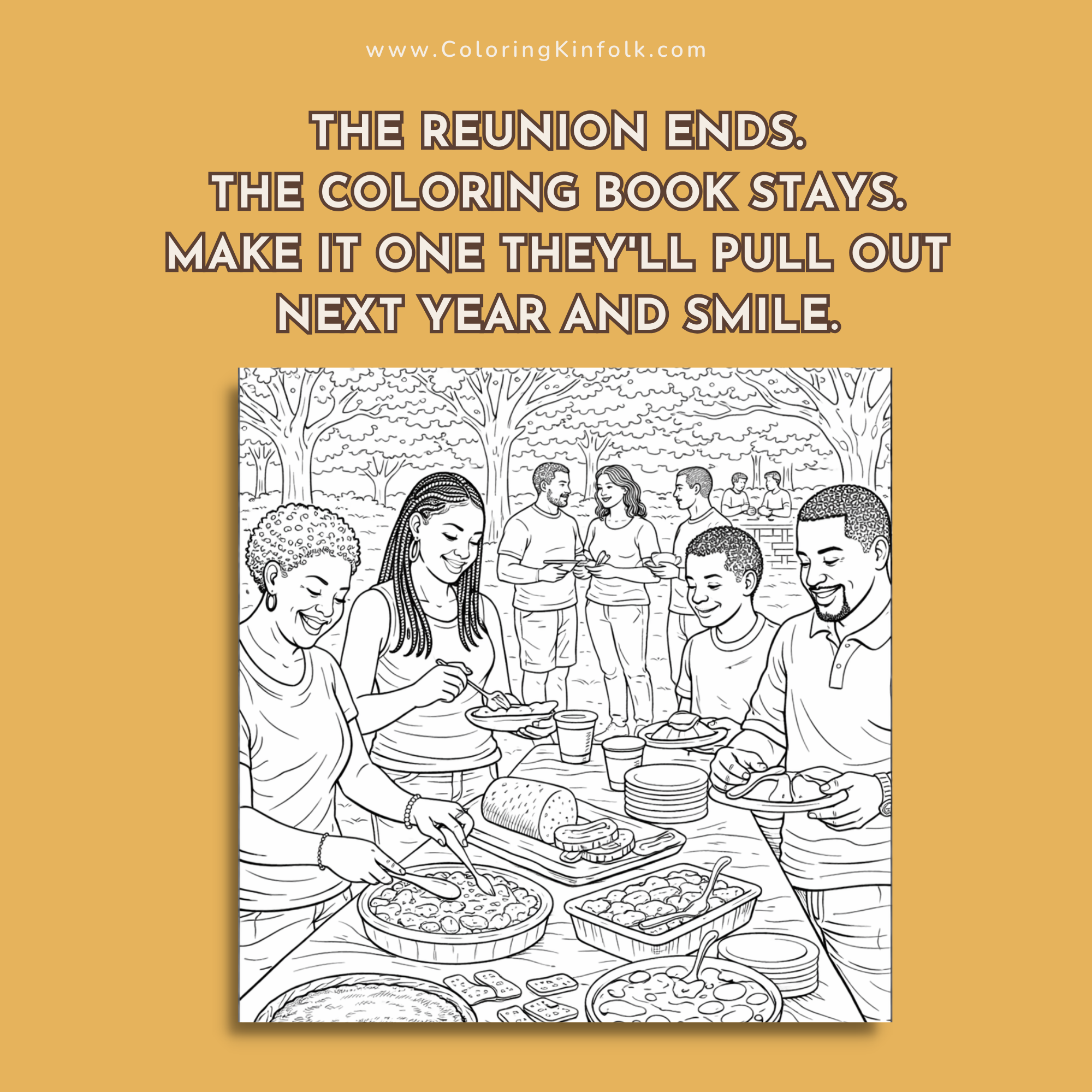
Coloring Kinfolk’s Family Reunion institutional license ($197) includes 25+ culturally specific pages, unlimited printing rights, legal group use, and reusability year after year. One purchase, unlimited impact.
Leave a Reply