Most “multicultural” coloring books miss the mark on Black representation. They change skin tone but leave everything else generic. Here are five things publishers, buyers, and even well-meaning creators consistently get wrong about what authentic Black representation actually requires.
Misconception 1: ‘Multicultural’ Means Black
The word “multicultural” in coloring book marketing almost always means “we included brown-skinned figures.” It doesn’t mean the cultural world depicted—the settings, objects, situations—reflects any particular community’s actual experience.
A brown-skinned woman in an undefined room with generic furniture is not Black representation. It’s a skin tone swap applied to a culturally neutral template. Real representation requires cultural context, not just melanin.
What Culturally Specific Actually Looks Like
Coloring Kinfolk’s Sunday Dinner collection doesn’t just show brown-skinned people at a table. It shows a specific table with specific food: mac and cheese, collard greens, cornbread, fried chicken. The hats on the shelf. The cast iron skillet. The pressure cooker. The details that make it recognizable as a Black American Sunday Dinner, not a generic family meal.
That specificity is not decorative. It’s what makes the page feel like home instead of a stock image with a diversity filter.
RELATED: 5 Ways Coloring Books Bring Black Families Together
Misconception 2: Portraits Are Enough
The dominant format in the African American coloring book market is portraits. Beautiful faces. Natural hair. Afrocentric jewelry. These are lovely products, but they’re not culturally specific in the therapeutic sense.
For reminiscence therapy applications, for memory care, for nostalgic connection, what matters is the world around the figure, not just the figure. Scenes activate memory. Portraits activate appreciation. Both have value, but they serve different purposes.
Why Scenes Matter More for Memory Work
A portrait of a Black woman with an afro is beautiful. But it doesn’t tell you where she is, what she’s doing, what world she inhabits. A scene of Grandma’s Kitchen shows you the pressure cooker, the cast iron skillet, the flour canister, the recipe box. Each object is a memory trigger.
For memory care facilities serving Black American elders, scene-based imagery is not optional. It’s the entire therapeutic mechanism. The research on reminiscence therapy is unambiguous on this point.
Misconception 3: Black History Month Covers the Whole Year
A significant portion of the Black history printable and coloring book market spikes in February and June and flattens otherwise. This reflects a misconception: that Black culture is historical and celebratory, not a daily living category.
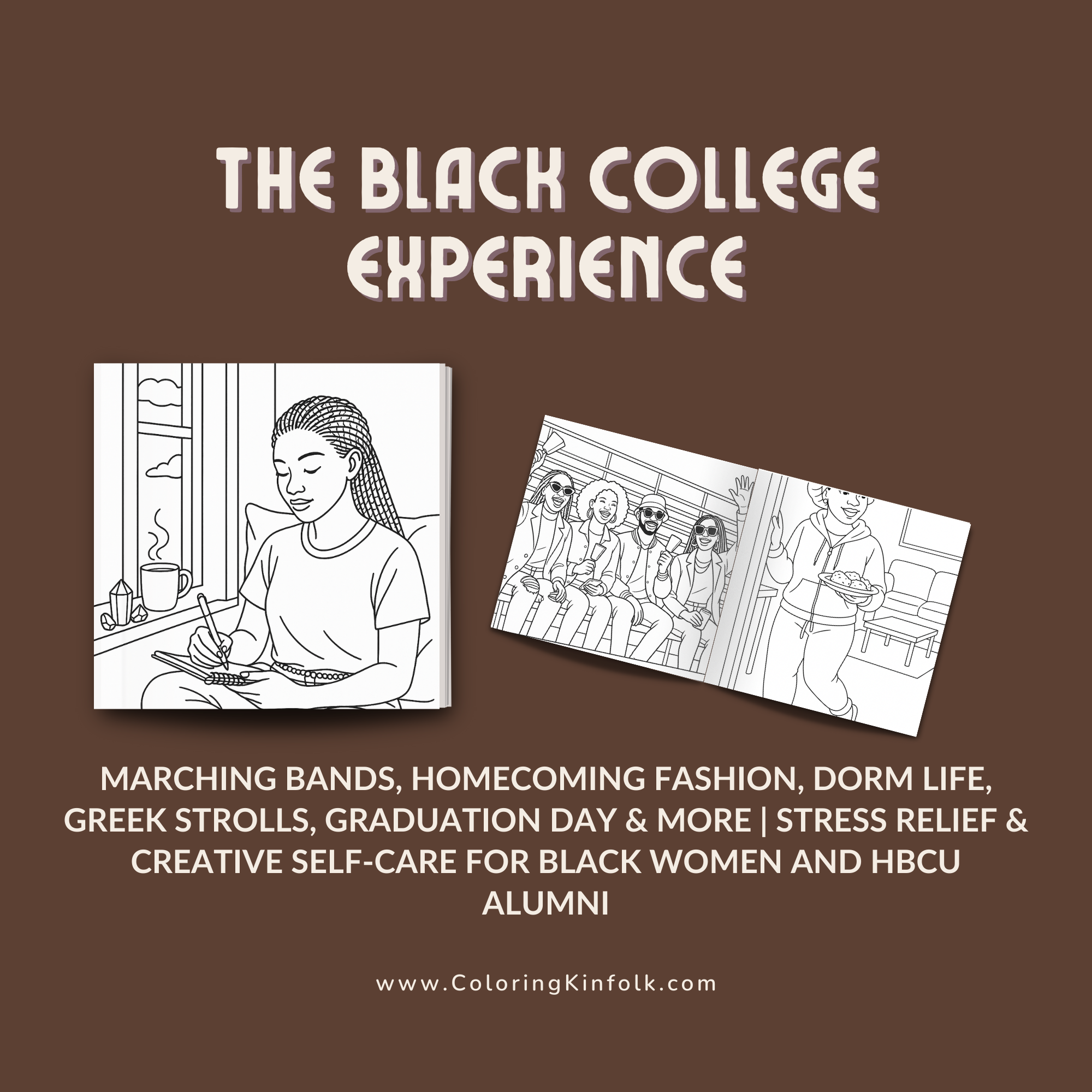
Black American life happens every day. Sunday Dinner is not a Black History Month event. Grandma’s Kitchen is not seasonal. The HBCU experience is not confined to homecoming weekend. These are ongoing, lived experiences, not commemorative moments.
Why Everyday Life Matters
Coloring Kinfolk was built on this principle: Black American domestic life deserves representation year-round, not just during heritage months. The front porch. The kitchen table. The church Sunday. The family reunion. These are not historical artifacts. They’re contemporary culture.
When publishers treat Black representation as seasonal content, they’re saying Black life only matters during designated celebration windows. That’s not representation. That’s tokenism.
RELATED: 4 Reasons Cultural Coloring Books Make Better Gifts
Misconception 4: Institutional Buyers Don’t Need Culturally Specific Products
The research on reminiscence therapy is unambiguous: culturally specific stimuli produce better outcomes than generic ones for elder populations with dementia and cognitive decline.
An activity director resource that treats all seniors as culturally interchangeable is not providing best-practice programming. A memory care facility serving predominantly Black American elders needs materials that reflect those lived experiences, not generic “diversity” content.
What Institutional Buyers Actually Need
Cultural competence in elder care programming requires three things: scene-based imagery that mirrors resident lived experience, large print and bold lines for accessibility (not optional), and institutional licensing that allows legal reproduction for group use.
Coloring Kinfolk is the only brand in the culturally specific Black American coloring book market offering dedicated institutional bulk licenses ($197+) with print rights. That’s not an upsell. That’s compliance.
Misconception 5: A Diverse Cover Is a Diverse Book
A book with a beautiful Black woman on the cover and generic mandala patterns inside is not an Afrocentric coloring book. It’s a coloring book with an Afrocentric cover. The cover is marketing. The interior is the product.
When evaluating any Black culture adult coloring book, look past the cover. Examine the internal content. Does the interior match what the cover promises? Or is this a generic adult coloring book with a diversity marketing wrapper?
How to Evaluate Interior Content
Look for: Specific cultural references (named foods, recognizable objects, particular settings). Scene-based imagery, not just portraits. Variety that reflects the breadth of Black American life, not one narrow aesthetic. Creator or artist identification with cultural context.
Red flags: All portraits, no scenes. Generic settings (undefined rooms, abstract backgrounds). No specific cultural references. Marketing copy uses “multicultural” or “diverse” without naming a specific culture. No artist name or cultural context provided.
RELATED: 3 Ways to Tell If a Coloring Book Is Culturally Authentic
What Genuine Representation Requires
Real Black representation in coloring books requires: Cultural specificity, not generic diversity. Scene-based imagery that reflects actual lived environments. Everyday life, not just historical or celebratory moments. Interior content that matches cover promises. Institutional products built for institutional use cases.
These aren’t impossible standards. They’re basic requirements for authentic representation. The fact that most “multicultural” coloring books fail to meet them says more about the market than about what’s achievable.
Why This Matters Beyond Coloring Books
The issues with Black representation in coloring books mirror issues with Black representation in media generally. Surface-level diversity (cast a Black actor, change some skin tones) without cultural depth. Seasonal attention during heritage months, silence the rest of the year. Marketing that promises specificity, content that delivers generic “diversity.”
Coloring books are a small market. But the principles matter everywhere. Representation without recognition is not representation. It’s performance.
Recognition, Not Just Representation
Genuine Black representation requires cultural specificity, scene-based imagery, and everyday life depicted year-round. Not generic diversity with a melanin filter.
Coloring Kinfolk was built on this principle: Black American domestic life deserves authentic representation. From Sunday Dinners to HBCU experiences to everyday Black joy, every page reflects actual lived experience.
Experience Genuine Representation → Shop Amazon Collection →
Leave a Reply